

Battery Safety After a Crash: What EV Drivers Need to Know in Oxnard
Electric and hybrid vehicles offer impressive performance and lower emissions, yet their battery packs introduce unique risks after an accident. Unlike a gas tank that can be inspected visually, the battery pack sits under the floor and contains hundreds of cells. High‑voltage wiring and lithium‑ion chemistry mean that even minor impact damage can create hazards. For drivers in Oxnard, Ventura County and the surrounding areas, understanding battery safety after a crashis vital for both your safety and your vehicle’s value.
1. Safety Concerns After a Crash
Even if your electric vehicle still moves after a collision, do not drive it. High‑voltage batteries can remain energized after a crash, and damaged cells may release toxic or flammable gases. Simply turning the car off is not enough — exposed cables or punctured cells may still carry dangerous current. Move to a safe distance and call emergency services so trained responders can secure the vehicle and prevent further damage.
Many modern EVs include pyrotechnic fuses that automatically isolate the battery during a collision. Bosch engineers note that their microchip‑controlled “pyrofuse” systems can disconnect high‑voltage cables in fractions of a second, preventing electric shock and allowing first responders to work safely (autocarpro.in). These devices blow out sections of the high‑voltage cable using miniature explosive charges. However, you should still avoid touching orange‑colored cables or leaking fluids and wait for emergency crews to secure the vehicle.
Key safety tips:
Move away from the vehicle if you see smoke, smell chemicals or hear popping sounds.
Avoid touching any exposed wires or high‑voltage cables.
Call 911 and let firefighters or tow operators handle the car.
Have the vehicle towed to a qualified collision repair shop for a full inspection.
2. Battery Condition & Diagnosis
The battery pack sits within a protective case under the vehicle floor, but severe crashes can dent, puncture or short‑circuit it. After a collision, your EV’s onboard systems may disconnect the battery to protect occupants, yet hidden damage can remain. Only trained technicians with manufacturer‑approved diagnostic tools can determine if the battery is safe.
Industry reporting shows that many EVs cannot have their battery packs safely repaired or even assessed after an accident. Reuters noted that insurance companies often write off vehicles with only minor battery damage because there is no practical way to inspect or repair the packs. Battery packs can cost tens of thousands of dollars and make up as much as half of an EV’s value, so replacing them is often uneconomical. Automakers like Ford and GM are working on more repairable designs, but some models, such as the Tesla Model Y, still have “zero repairability”.
How technicians check your battery:
Visual inspection – They look for dents, cracks or leaks in the battery case.
Diagnostic scan – Technicians connect factory software to search for fault codes.
Cell monitoring – Some shops monitor the battery for 24–48 hours to ensure there is no delayed thermal runaway.
Decision to repair or replace – If the pack is punctured or shorted, replacement is usually the only safe option.
3. Collision Repair & Body Shop Procedures
Certified collision centers follow strict safety protocols when working on EVs. Before any repairs begin, technicians:
Shut off the ignition and remove the key to prevent accidental restart.
Disconnect the 12‑volt battery and high‑voltage system using service plugs and fuses.
Wait for residual energy to dissipate and verify zero voltage with a digital meter.
Lock out and tag the high‑voltage system so it cannot be re‑energized during repairs.
Use insulated tools and protective gear throughout the process.
Bosch’s pyrofuse systems can automatically cut power during a collision, but technicians still test and confirm that the high‑voltage system is completely de‑energized. Shops also inspect for leaks, cracks and warning lights and follow the vehicle manufacturer’s repair manuals. Only facilities with I‑CAR Gold Class or ASE L3 EV/Hybrid Technician certifications—and manufacturer approvals—should work on your electric vehicle.
4. Insurance & Claims
When you file a claim after an EV accident, tell your insurance adjuster that your vehicle is electric or hybrid and describe any warning lights, odors or shutdowns. Ask to have the vehicle inspected at an EV‑certified repair shop and confirm that any replacement parts will be genuine OEM components.
EVs often cost more to insure than gasoline cars because battery repairs are so expensive. Reuters reports that the average U.S. monthly EV insurance premium in 2023 is $206, roughly 27% higher than for a combustion‑engine vehicle. The difference reflects the risk that even a minor collision could require a battery replacement costing $15,000 or more.
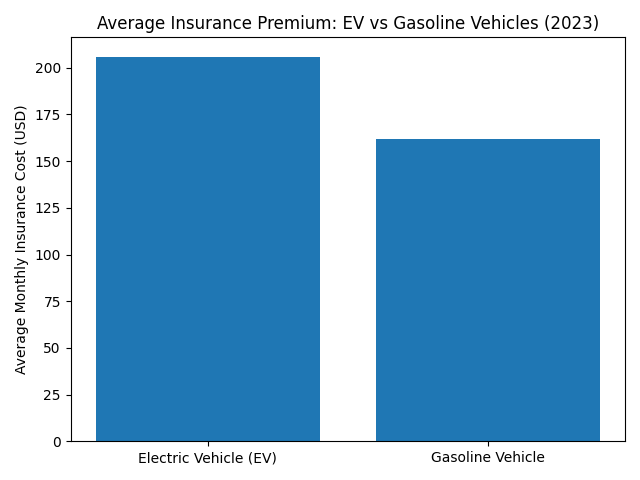
Figure: Average monthly insurance cost for EV and gasoline vehicles (2023). EV premiums are higher because insurers must account for the potential replacement of costly battery packs.
5. When to Repair and When to Replace
While minor cosmetic damage may leave the battery unaffected, any cracks, punctures or electrical faults in the pack generally mean replacement is the only safe choice. Older hybrids with nickel‑metal hydride batteries sometimes allow individual cell replacement, but most modern lithium‑ion packs are not serviceable after impact. Because battery packs can represent up to 50% of an EV’s value, insurers may declare the vehicle a total loss even when the rest of the car is repairable.
Common signs of battery damage:
Dashboard warning lights or error messages
Burning smells or smoke
Unusual noises coming from under the vehicle
Visible leaks or punctures in the battery case
If you notice any of these, stop using the vehicle and have it towed to a qualified shop immediately.
6. How Prestige Bodyworks Handles EV Battery Repairs
At Prestige Bodyworks in Oxnard, California, our state‑of‑the‑art facility is located at 4121 Southbank Road. As a BMW Certified Collision Repair Center and Tesla Approved Body Shop, we have earned factory recognition to handle structural and cosmetic repairs for these brands. Our team also holds I‑CAR Gold Class and ASE L3 EV/Hybrid certifications, ensuring they understand the latest high‑voltage systems. We use only genuine OEM partsand follow each manufacturer’s repair procedures, from de‑energizing the battery to calibrating ADAS sensors. We participate in Direct Repair Programs (DRPs) with major insurers like USAA and State Farm, simplifying claims and helping you get back on the road faster. With more than thirty years of collision repair experience, drivers from Ventura, Camarillo, Port Hueneme and across Ventura County trust us to protect their EVs’ safety and value.
Conclusion
Electric vehicles are engineered with advanced safety systems, but their high‑voltage batteries require special care after a crash. Never drive a damaged EV—assume the battery could still be energized, call emergency services, and have the vehicle towed. Only certified collision centers with EV training and manufacturer approvals should inspect and repair your vehicle. Collision and comprehensive insurance policies may cover battery damage, but coverage varies by insurer and policy. By understanding the unique risks and taking the right steps, you protect your safety and your investment.
If you’ve been in a collision in Oxnard or the surrounding area, contact Prestige Bodyworks for a professional battery safety inspection and collision repair. Our team will work with your insurer, follow OEM procedures, and ensure your EV is safe and ready for the road again.
