

Choosing an Auto Body Shop in Oxnard: 7 Questions Every Driver Should Ask
When your vehicle has been damaged in a crash on an Oxnard roadway or parking lot, your first priority is safety — yours and your car’s. Unfortunately, many drivers choose a repair shop based on price or familiarity instead of repair quality. A consumer survey for I‑CAR, a collision‑repair training organization, found that 71 % of respondents initially based their choice of body shop on price and 57 % on familiarity or convenience. After respondents learned about safety and the importance of properly trained technicians, 83 % said the ability of a shop to restore crash protection was their top criterion, and 76 % prioritized shops that maintained the vehicle’s original crash‑test rating and employed trained technicians. In other words, to protect your family and your investment, you need to ask the right questions before handing over your keys.
1 Are the shop and its technicians properly certified?
Certification signals that a body shop has invested in training and equipment to meet industry standards. State Farm notes that consumers should look for national credentials like I‑CAR Gold Class and Automotive Service Excellence (ASE), because these designations indicate that the shop’s technicians are trained to meet industry safety and repair standards. Industry research shows how strongly training affects customer priorities: when consumers were introduced to the concept of I‑CAR Gold Class, 78 % said the certification was extremely or very valuable, 48 % wanted to know what qualifies a shop for Gold Class and 31 % immediately wanted to choose a Gold Class facility. Hanover Insurance also advises making sure the shop works on your make and model and has experience with vehicles like yours. So ask about I‑CAR, ASE and manufacturer‑specific certifications and verify that the person repairing your car has the credentials for your vehicle’s systems.
2 Do they use OEM parts, and can they explain the parts used?
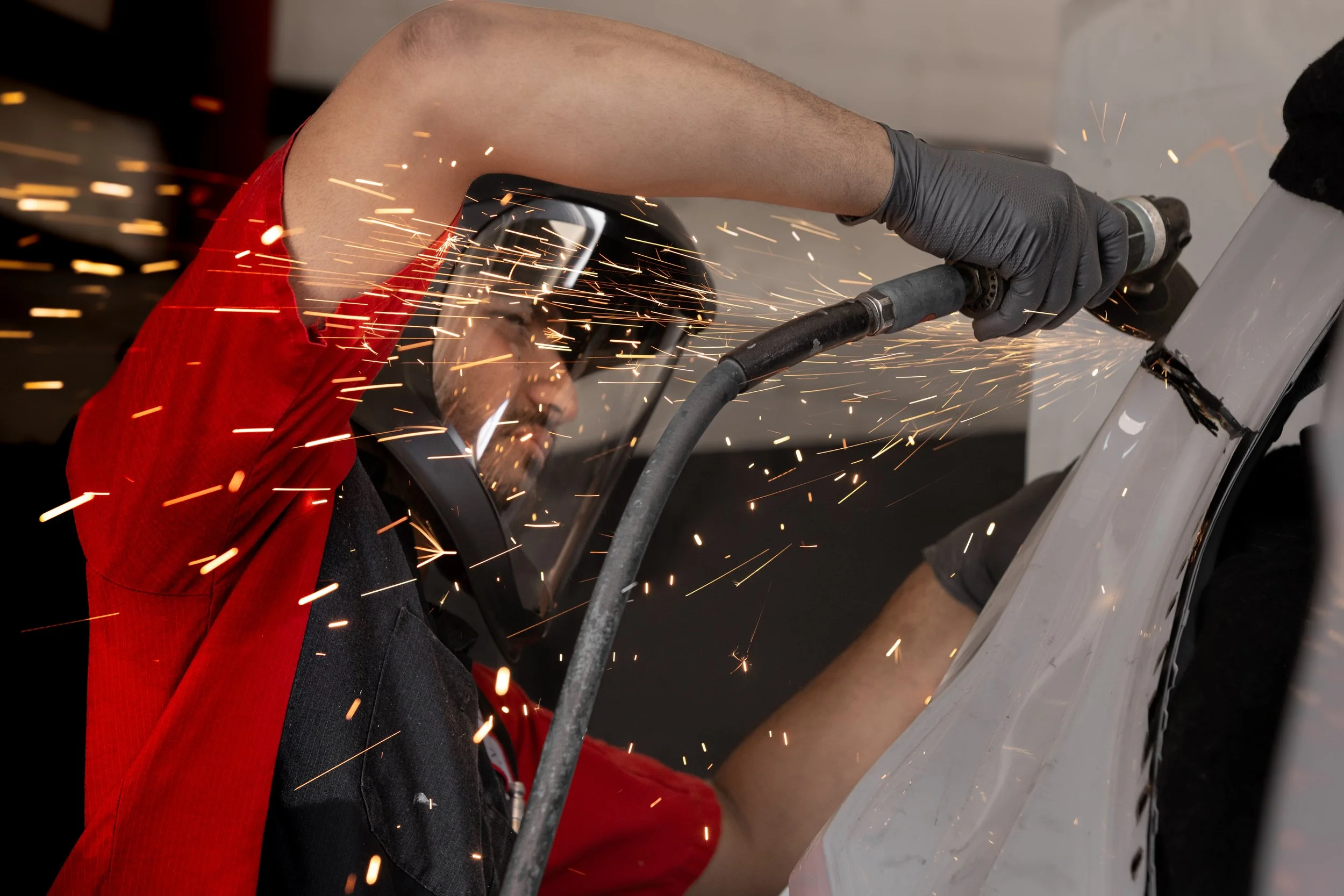
Not all replacement parts are the same. Repairs may involve original equipment manufacturer (OEM) parts, aftermarket parts, recycled components or reconditioned items. State Farm cautions that insurance estimates sometimes specify cheaper aftermarket parts and that you may need to pay the difference if you insist on OEM. The Washington Post tips reprinted in Repairer Driven News urge consumers to ask about the differences between OEM, used and aftermarket parts. OEM parts are designed for your vehicle and help preserve structural integrity and crash performance. If you want OEM components, discuss this with both the shop and your insurer in advance. A reputable shop will explain the options, identify each part on your estimate and ensure that critical safety parts aren’t substituted with inferior substitutes.
3 What kind of warranty do they offer?
Warranties vary widely among body shops. State Farm notes that some facilities offer lifetime warranties on repairs and paint, while others provide coverage only for a limited time or specific services. Hanover Insurance suggests asking whether the shop provides a warranty, how long it lasts and what it covers (for example, paint, workmanship or rust perforation). The Washington Post story points out that some independent shops even guarantee their workmanship for as long as you own the car. Understanding the warranty terms — and whether they transfer to a new owner — can give you peace of mind that the shop stands behind its work. Avoid shops that refuse to put their warranty in writing.
4 Are they equipped to calibrate ADAS and handle modern technology?
Modern vehicles use advanced driver‑assistance systems (ADAS) such as automatic emergency braking, lane‑keeping assist and adaptive cruise control. After any collision repair, these sensors often need precise calibrationto function correctly. A 2025 study by Ascential Technologies, reported in Repairer Driven News, found that “good calibration restores and enhances ADAS performance,” while poor or no calibration can cause systems to fail silently or behave unpredictably. The research concluded that maintaining sensor accuracy after repairs is essential for safety and regulatory compliance. The Washington Post tips advise asking whether ADAS calibrations will be performed in‑house, by a dealer or not at all, and the article suggests verifying that the shop follows OEM calibration procedures. In Oxnard, where new cars often feature these technologies, choosing a shop with ADAS capability is critical to ensure your safety systems work as designed.
5 Will they provide a detailed written estimate and keep you informed?
Transparency is key to trust. Hanover Insurance recommends obtaining written estimates that detail the condition to be repaired, the parts needed and the anticipated labor charges; they note that the lowest estimate may not be the best because a very low price might mean cutting corners. The Washington Post tips stress that estimates should be free, in writing and accompanied by notes and photos documenting the damage. Nationwide adds that you should receive written documentation for every step, with separate line items for parts, labor, taxes and fees, and that parts should be identified as new, rebuilt, remanufactured or used. Ask the shop how they will communicate if additional damage is discovered and how often you’ll receive progress reports — a transparent shop will keep you updated to avoid unpleasant surprises.
6 How do they handle insurance and billing?
Insurance companies often have preferred repair networks. State Farm notes that programs like its Select Servicenet work prescreen shops for quality, customer service and timely repairs, and can streamline billing and vehicle pickup. However, the Washington Post article reminds consumers that you’re not required to use your insurer’s recommended shop; you can choose any facility and still have your claim covered. Ask potential shops whether they work directly with your insurer and whether they can assist with paperwork and supplements — especially if additional damage is found during repairs. Also ask about payment policies: who pays the difference if the shop’s rates exceed the insurance estimate, and how long you’ll wait for the appraiser to review the repair plan.
7 What is their reputation and experience?
Word‑of‑mouth and reputation play a big role in selecting a body shop. Two‑thirds of customers find collision repair facilities by talking to friends or relatives, according to the I‑CAR survey. The same research found that 95 % of customers who have a bad experience tell someone about it, and 87 % share good experiences. Hanover suggests asking co‑workers, neighbors and relatives for recommendations and checking online reviews and Better Business Bureau complaints to gauge a shop’s reputation. Nationwide advises researching shops online and states that you should take online reviews with a grain of salt while also checking for complaints with your state attorney general or consumer protection agency. When you visit a shop, look for signs of professionalism: clean and organized work areas, proper lighting, OEM certificates on display and vehicles similar to yours being repaired. Finally, ask how long the business has been serving Oxnard and whether they have experience repairing your make and model.
Why Ventura County Drivers Trust Prestige Bodyworks
At Prestige Bodyworks, we know your vehicle is more than just transportation — it’s a safeguard for your family. That’s why our Oxnard facility meets the highest industry standards. We are manufacturer‑certified for BMW and Tesla, and our technicians maintain I‑CAR Gold Class and ASE credentials. We use OEM parts and follow factory‑approved procedures to restore your car’s structural integrity and safety systems. Our repairs are backed by a lifetime warranty on workmanship and paint, and we invest in advanced ADAS calibration equipment to ensure your driver‑assistance systems operate correctly. We also work with all major insurers and offer transparent written estimates and progress updates. As a trusted Ventura County business, we invite you to check our Collision Repair, Car Accident Repair and About Prestige Bodyworks pages to learn more.
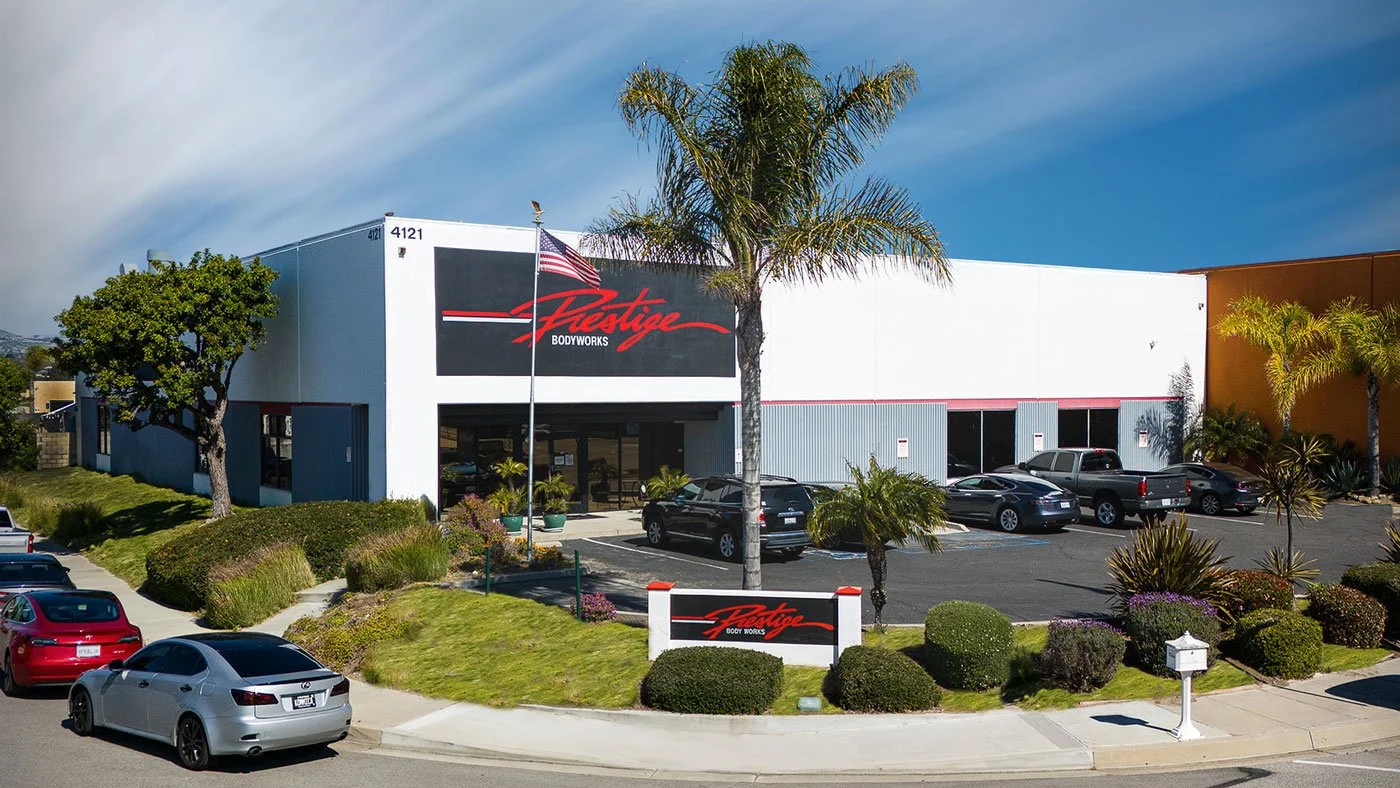
Prestige Bodyworks provides a comprehensive suite of services to restore vehicles after any crash. In addition to our core collision repair offering, we perform frame straightening, dent and scratch removal, and paint matching and refinishing. Our team is trained to work on both modern and classic vehicles, including those with complex advanced driver‑assistance systems (ADAS) that require careful calibration after repairs. Whether your car has sustained minor bumper damage or severe structural harm, we have the expertise and equipment to return it to manufacturer specifications. We also assist with insurance claims, coordinate towing and rental vehicles, and provide clear communication throughout the process. As Ventura County’s trusted auto body shop, Prestige Bodyworks is committed to delivering high‑quality repairs and outstanding customer service on every job.
Ask the Right Questions for Peace of Mind
Choosing an auto body shop isn’t just about getting back on the road; it’s about ensuring your vehicle is repaired correctly and safely. By asking about certifications, parts, warranties, ADAS capabilities, written estimates, insurance handling and reputation, you’ll uncover whether a shop truly prioritizes your safety and investment. Oxnard drivers have options, but only a shop that answers these questions confidently — and backs up its promises with training and transparency — deserves your trust. Take the time to research and ask questions now, and you’ll drive away with confidence knowing your car has been restored to its pre‑accident condition.
