

Why Frame Damage Is Not Always Visible After a Minor Collision
Frame damage is not always visible after a minor collision because modern vehicles are designed to absorb crash energy beneath exterior panels. Components such as frame rails, bumper reinforcements, and subframes may deform even when body panels appear intact.
In Oxnard, where stop-and-go traffic and tight parking are common, drivers often experience minor impacts and assume their vehicle is undamaged. However, structural damage can occur beneath the surface, making a professional collision repair inspection important even when visible damage appears minimal.
How Modern Vehicles Conceal Structural Damage
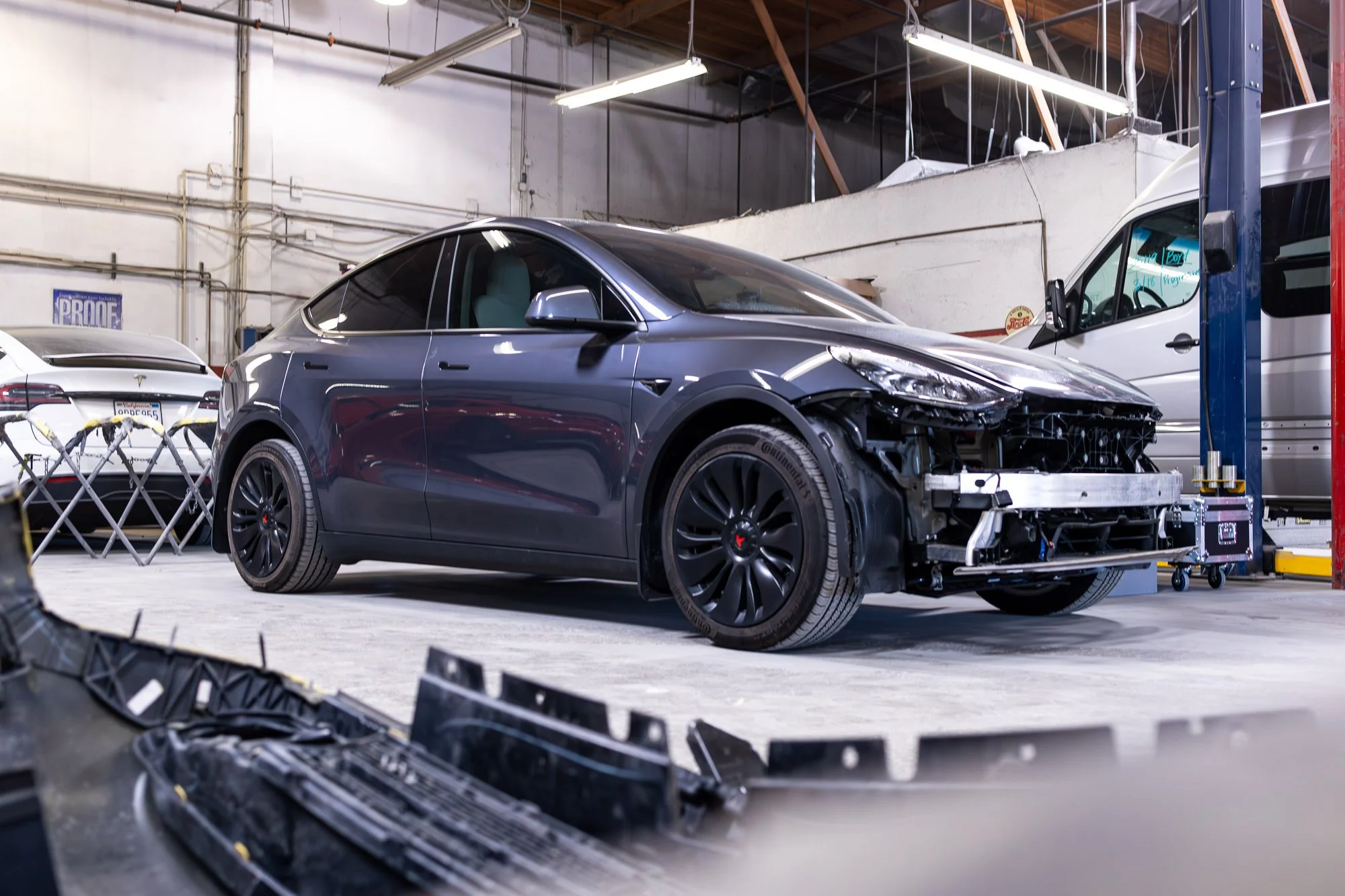
Today’s vehicles are designed with crumple zones and energy-absorbing structures to protect passengers in an impact. While this improves safety, it also means damage is often absorbed below the surface.
These hidden issues can include:
Bent Or Cracked Bumper Reinforcements
Subframe Misalignment
Twisted Frame Rails
Damaged Sensor Brackets Or Weld Points
Structural shifts can also affect suspension geometry, steering, and ADAS (advanced driver-assistance systems), even if the vehicle seems to drive normally.
Why Minor Collisions Can Still Cause Structural Damage
Modern vehicles are engineered to absorb crash energy in specific areas to protect occupants. As a result, even a low-speed collision can affect structural components that are not immediately visible.
Key structural components designed to manage crash energy include:
Bumper Reinforcement – A metal beam located behind the bumper cover that absorbs and distributes impact forces.
Crash Boxes – Small structural components designed to deform during a collision to reduce damage to the frame rails.
Crumple Zones – Engineered sections of the vehicle designed to collapse in a controlled way to absorb crash energy before it reaches the passenger compartment.
Hidden Structural Members – Components such as frame rails, subframes, and mounting points that support the vehicle’s structure but are often concealed behind panels.
A DEKRA Automotive Crash Test Study demonstrated that a 6 mph (9.9 km/h) impact caused both front frame rails to deform on a Mercedes-Benz C-Class, even though exterior damage was nearly invisible.
CCC Intelligent Solutions reported that more than 60% of collision vehicles have hidden damage discovered only after teardown.
Because these parts sit beneath exterior panels, damage may occur without obvious visible signs, which is why a professional collision repair inspection is often necessary after an accident.
Hidden Damage Often Found During Teardown
An initial estimate after a collision is typically based on visible damage only. However, many structural and safety-related issues are discovered later during the teardown process, when technicians remove panels and components to inspect what lies beneath the surface.
Industry data shows that hidden damage is common after accidents. CCC Intelligent Solutions reports that more than 60% of collision vehicles require additional repairs once teardown reveals damage that was not visible during the initial inspection.
During teardown, technicians may discover issues such as:
Bent Or Damaged Bumper Reinforcements – Impact forces can deform the reinforcement bar behind the bumper even when the outer bumper cover appears intact.
Shifted Subframes Or Mounting Points – Structural mounting points may move slightly during a collision, affecting suspension alignment.
Damaged Radiator Supports Or Structural Brackets – Components supporting the cooling system and front structure may bend or crack beneath exterior panels.
Misaligned Sensor Mounts – Radar, camera, or ADAS sensor brackets may shift during impact and require repositioning or replacement.
Hidden Fastener Or Mounting Damage – Bolts, clips, and structural mounting points may loosen or distort after an impact.
Because these issues cannot usually be detected during a visual estimate, teardown and structural inspection help technicians determine the full scope of repairs needed to restore the vehicle safely.
Source:
CCC Intelligent Solutions – Crash Course Report on Collision Industry Trends
Common Misunderstandings About Frame Damage

"If it drives fine, it must be fine." Not always. A vehicle may steer straight after an accident but still have subtle structural misalignments that affect long-term performance and crash safety.
"There’s no visible damage, so nothing’s wrong." In many cases, components like bumper beams or frame rails are damaged behind intact plastic covers. Only a teardown and digital measurement can reveal the truth.
What Happens During Frame Damage Collision Repair
Repairing frame damage involves a structured process designed to restore the vehicle’s structural integrity and safety systems. Certified collision repair facilities follow manufacturer procedures to ensure the vehicle meets factory specifications before returning it to the road.
A typical frame damage collision repair process includes the following steps:
Initial Inspection – Technicians begin with a visual inspection and diagnostic scan to identify visible damage and potential structural concerns.
Teardown And Structural Assessment – Exterior panels and related components are removed so technicians can inspect the vehicle’s structural areas and identify hidden damage.
Damage Documentation And Measurement – Structural measuring systems are used to compare the vehicle’s alignment points with factory reference specifications to determine the extent of the damage.
Repair Plan Development – A detailed repair plan is created based on manufacturer repair procedures, parts requirements, and structural measurements.
Structural Repair Or Frame Straightening – Specialized frame equipment is used to carefully realign structural components or replace damaged sections according to OEM repair standards.
Reassembly And Component Replacement – Damaged parts are replaced and structural components are reassembled using manufacturer-approved methods.
Calibration And Safety System Testing – Advanced driver-assistance systems (ADAS), sensors, and safety features are recalibrated and tested to confirm proper operation.
Final Inspection And Quality Verification – Technicians perform a final structural check, road test, and quality inspection to ensure the vehicle meets repair and safety standards.
Following this structured process helps ensure that frame damage collision repair restores the vehicle’s alignment, structural strength, and safety systems before it returns to the road.
Why a Professional Inspection Matters
After a collision, it is not always possible to determine the full extent of damage by looking at the vehicle alone. Even when exterior panels appear intact, structural components beneath the surface may have shifted or weakened during the impact.
A professional collision repair inspection helps determine whether the vehicle’s structural integrity, alignment, and safety systems remain within manufacturer specifications. Without proper evaluation, hidden damage can affect steering stability, suspension geometry, and the vehicle’s ability to manage crash forces in a future collision.
For this reason, collision repair professionals rely on structural measurements, teardown inspections, and manufacturer repair procedures to identify damage that may not be visible during an initial estimate.
Because modern vehicles integrate advanced materials and safety technology, accurate inspection and documentation are essential before any structural repair begins.
How Prestige Bodyworks Detects and Repairs Frame Damage
Detecting structural damage requires specialized equipment and manufacturer repair procedures. At certified collision repair facilities such as Prestige Bodyworks in Oxnard. As a BMW Certified Collision Repair Center and Tesla-Approved Body Shop, we follow OEM repair protocols that include:
Digital three-dimensional frame measuring
Use of OEM parts and factory-approved procedures
I-CAR Gold Class and ASE-certified technicians
Full disassembly and structural inspection
ADAS recalibration and safety system scans
Prestige Bodyworks confirms participation in State Farm Select Service and USAA Direct Repair Programs, simplifying insurance claims for Ventura County drivers.
Our facility serves drivers throughout Ventura County, offering trusted service that prioritizes your safety.
What to Expect as a Customer
If your car has been in a collision — even a minor one — here’s what to expect:
Inspection – Initial visual and diagnostic review
Teardown – Panels removed to inspect hidden damage
Repair Plan – Manufacturer repair procedures documented
Structural Repair – Frame straightening or structural replacement
Calibration & Testing – ADAS systems verified
Final Quality Check – Road testing and safety verification
Hidden collision damage is common after low-speed crashes, which is why a professional collision inspection is recommended even after a minor accident. Our team keeps you informed throughout the process so you understand what’s being done and why.
Protect Your Safety with a Professional Evaluation
Driving with hidden frame damage can compromise your vehicle’s crash protection, alignment, and safety systems. If you’ve recently been in a collision, don’t assume everything is fine. Let the certified technicians at Prestige Bodyworks perform a thorough inspection.
