

Why Frame Damage Is Not Always Visible After a Minor Collision
Why Frame Damage Is Not Always Visible After a Minor Collision
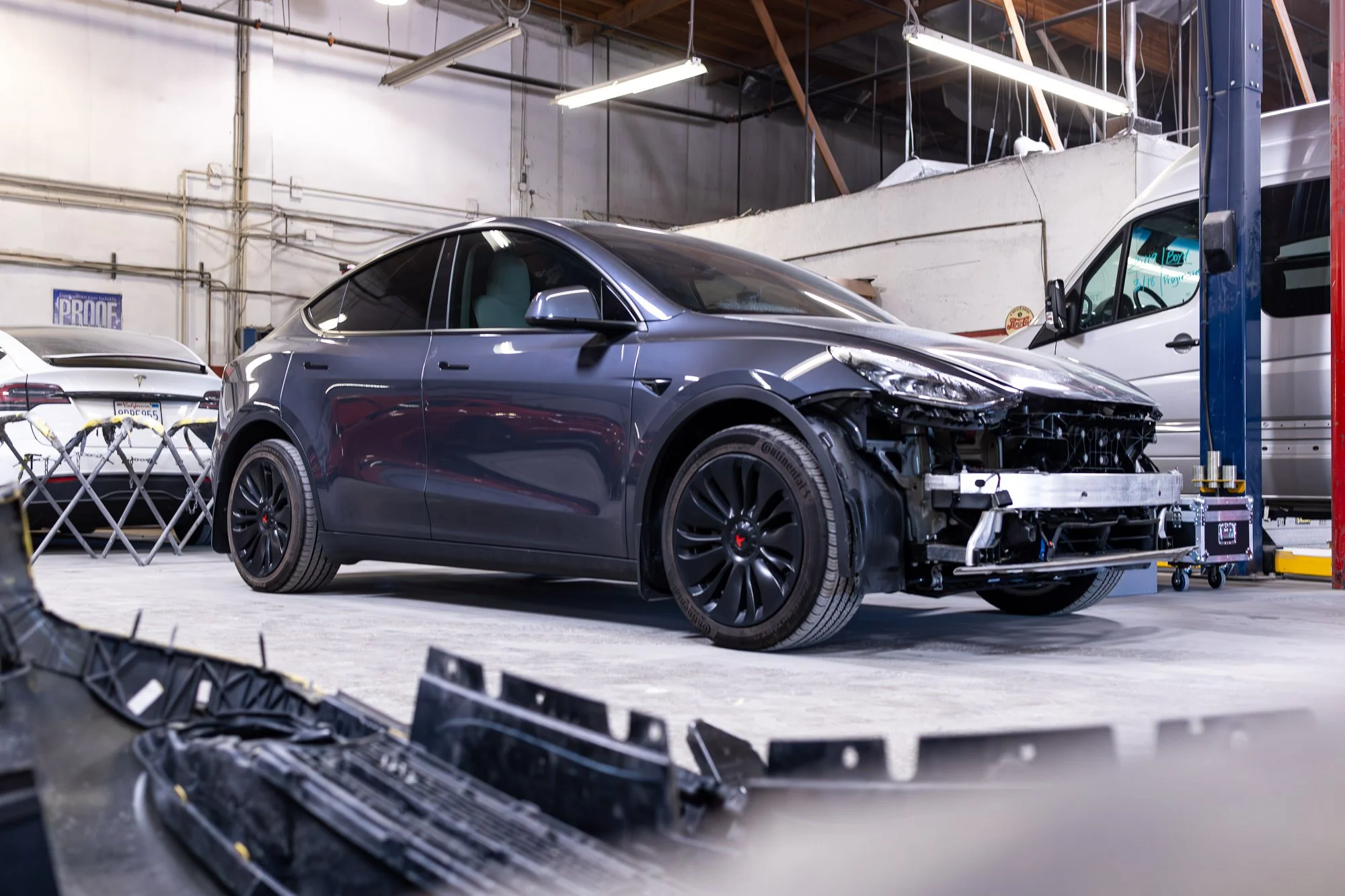
A low-speed collision can look surprisingly minor.
You may see a scratched bumper, a small dent, or a panel that no longer lines up quite right. However, the exterior of the vehicle does not always reveal every component affected by an impact.
That is why collision repair starts with evaluating the damage rather than making assumptions based only on appearance.
For drivers in Oxnard and Ventura County, understanding the difference between cosmetic and structural damage can help explain why a body shop may need to inspect beyond the damaged exterior panel.
Quick Answer: Can a Minor Accident Cause Frame Damage?
It can, depending on the vehicle, impact location, collision forces, and vehicle construction.
However, a minor collision does not automatically mean the frame is damaged.
The important point is that structural damage is not always obvious from the outside. A professional inspection can help determine whether the damage is limited to exterior components or extends into structural areas of the vehicle.
What Drivers Mean When They Say “Frame Damage”
The term frame damage is often used broadly.
Not every modern passenger vehicle has a separate traditional frame. Many vehicles use unibody construction, where multiple structural sections of the body contribute to the overall vehicle structure.
Therefore, depending on the vehicle, an inspection may involve areas such as:
Structural rails
Reinforcements
Mounting points
Aprons
Pillars
Floor sections
Other structural components
Crash testing also illustrates why vehicle structure should be considered as a system rather than simply by looking at the exterior panel that was struck.
The Insurance Institute for Highway Safety (IIHS), for example, maintains different test protocols for moderate-overlap frontal, small-overlap frontal, side, and other crash configurations.
This does not mean a minor real-world collision is equivalent to an IIHS crash test. Instead, it illustrates an important principle: impact location and crash configuration can influence how a vehicle responds to a collision.
Source:
Insurance Institute for Highway Safety (IIHS) – Test Protocols and Technical Information
Related: Collision Repair
Why Exterior Damage Can Be Misleading
Bumpers and exterior panels are the parts of collision damage drivers usually notice first.
However, other components may sit behind or adjacent to the visible damage.
For example, a bumper cover may show scratches and a dent while the surrounding area contains brackets, reinforcements, mounting points, wiring, or sensors that cannot be fully evaluated from the exterior.
Likewise, technicians may inspect nearby structural areas when the location or type of impact provides a reason to do so.
The table below shows examples of what technicians may evaluate. It does not mean these components are damaged in every collision.
Visible Damage vs. Areas That May Need Inspection
What you see on the outside does not always show every area that may need to be evaluated after a collision.
| What You May See | What Technicians May Also Inspect |
|---|---|
| Scratched or Dented Bumper | Reinforcement, brackets, mounting points, and sensors |
| Misaligned Body Panel | Mounting areas and adjacent structural components |
| Front-End Damage | Supports, structural areas, sensors, and related components |
| Rear-End Damage | Components behind the bumper, mounting areas, and sensors |
| Uneven Panel Gaps | Alignment and nearby structural areas |
The key word is may.
A damaged bumper does not automatically mean the reinforcement, sensors, or structure behind it is damaged. Instead, the location and nature of the collision help technicians determine what deserves closer inspection.
The inspection determines what is actually damaged.
Impact Location Matters
Two collisions that leave similar-looking exterior damage do not necessarily affect a vehicle in exactly the same way.
Factors can include:
Where the vehicle was struck
Direction of the impact
Vehicle construction
Components located behind the impact area
How the affected area responded to the collision
IIHS crashworthiness testing uses different frontal and side impact configurations to evaluate vehicle performance under different crash conditions.
For collision repair, that reinforces an important point: technicians need to evaluate the actual vehicle and affected area rather than judging repair needs solely by the size of the visible dent.
Source:
Insurance Institute for Highway Safety (IIHS) – Test Protocols and Technical Information
Signs That May Lead to a Closer Structural Inspection
Drivers sometimes notice changes after a collision that make them wonder whether the damage extends beyond the exterior panel.
These observations can provide useful information during an inspection. However, they should not be treated as a diagnosis of frame damage.
What You Notice vs. What It May Mean
Certain changes after a collision may give technicians a reason to inspect the affected area more closely.
| What You Notice | What It May Mean |
|---|---|
| Uneven Panel Gaps | May justify closer inspection of alignment and surrounding areas |
| Door, Hood, or Trunk Alignment Changes | May indicate that nearby components should be evaluated |
| Visible Deformation | Helps identify areas that may require closer inspection |
| Shifted Components | May indicate damage beyond the exterior panel |
| Vehicle Still Drives Normally | Does not by itself confirm that structural areas are unaffected |
None of these observations automatically confirms structural damage.
Likewise, the absence of an obvious symptom does not by itself confirm that no structural damage exists.
A proper assessment is needed to determine the actual condition of the vehicle.
Why Measurements and Manufacturer Information Can Matter
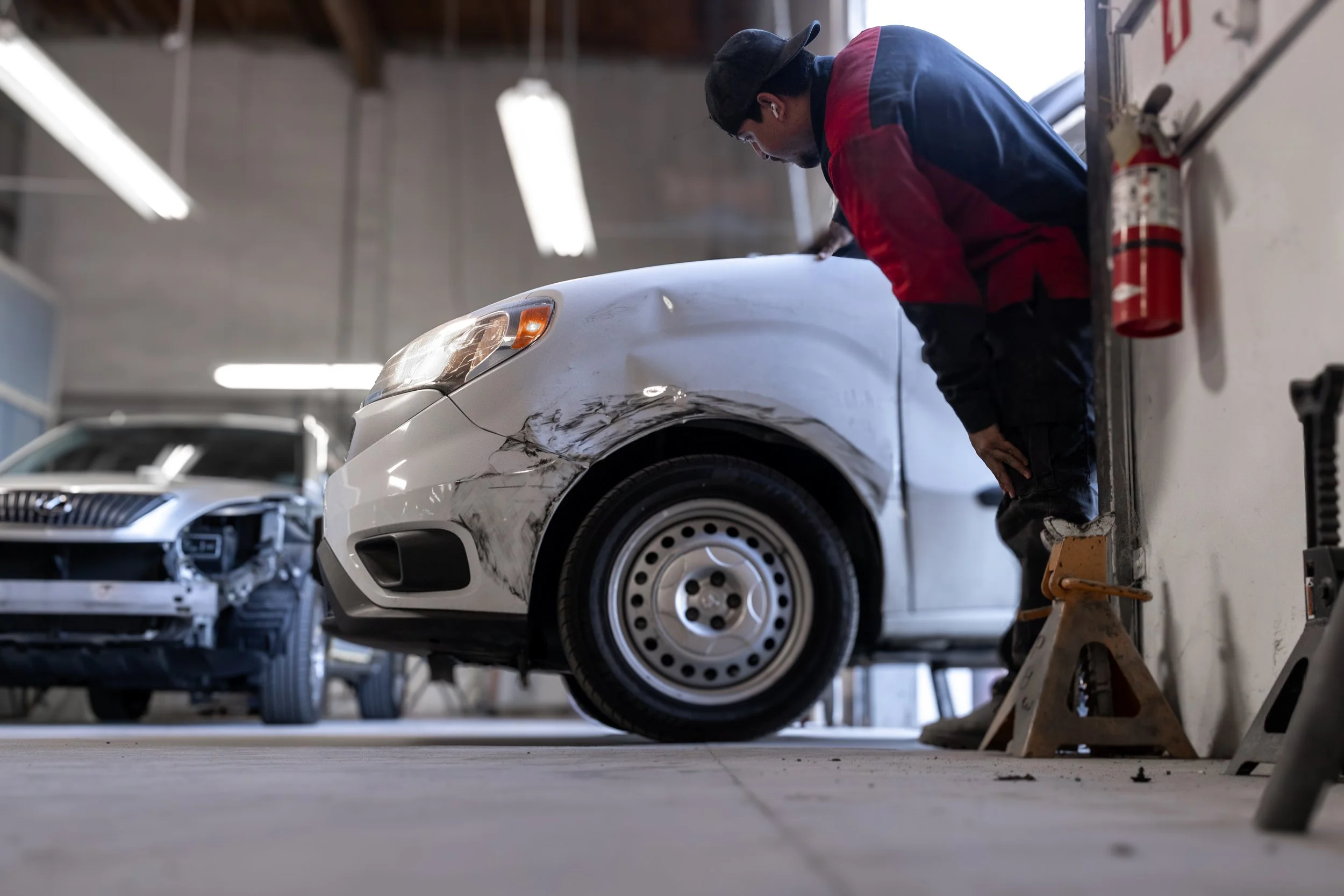
Visual inspection is an important starting point, but some collision repairs may require additional measurements or manufacturer repair information.
Depending on the vehicle and damage, technicians may evaluate structural areas against vehicle-specific specifications or use appropriate measuring equipment to check alignment.
If structural damage is identified, technicians can then develop the repair plan around the affected areas and applicable manufacturer repair procedures.
This is also why the appropriate repair method can vary from one vehicle to another. Vehicle construction, materials, and manufacturer procedures all need to be considered when applicable.
Related: Frame Repair
What About Cameras, Sensors, and Modern Vehicle Technology?
Structural components are not the only parts that may deserve attention after an impact.
Modern vehicles can include cameras, sensors, wiring, and other electronic systems around bumpers and body panels.
The National Highway Traffic Safety Administration (NHTSA) publishes research and information covering advanced vehicle and crash-avoidance technologies, reflecting how technology has become increasingly integrated into modern vehicles.
Whether a particular component requires inspection, diagnostics, calibration, or another procedure depends on the vehicle, impact, and repair being performed.
This is another reason a modern collision assessment can extend beyond the visible dent or scratch.
Source:
National Highway Traffic Safety Administration (NHTSA) – Published Reports and Documents on Advanced Vehicle Technologies
Common Misunderstanding: “It Was Only a Minor Accident”
The appearance of a bumper or dent does not provide all the information needed to determine the complete repair.
Vehicle design, impact location, direction, and other factors can affect which components need to be inspected.
At the same time, drivers should not assume every small accident caused serious structural damage.
The better approach is straightforward:
Inspect first. Identify the damage. Then build the repair plan around what the vehicle actually needs.
Common Misunderstanding: “If the Car Still Drives Normally, the Frame Must Be Fine”
A vehicle being drivable does not provide a complete structural assessment.
Some collision damage may not immediately change how a vehicle feels during a short drive.
Therefore, repair decisions should be based on inspection and applicable vehicle repair information rather than drivability alone.
How Prestige Bodyworks Evaluates Collision Damage
At Prestige Bodyworks in Oxnard, we begin by evaluating the vehicle and understanding what areas were involved in the collision.
Depending on the vehicle and impact, our technicians may inspect beyond the visible exterior damage to determine whether additional components or structural areas require attention.
When structural repairs are needed, the repair plan considers the vehicle, damage identified during inspection, measurements when applicable, and relevant manufacturer repair information.
Prestige Bodyworks assists drivers throughout Oxnard, Ventura, and Camarillo with:
Collision damage inspections
Collision repair
Frame and structural repair
Dent and body repair
Paint refinishing
Insurance claim assistance
Our goal is not to assume hidden damage exists. Instead, we identify what was actually affected so the repair plan reflects the condition of the vehicle.
Drivers can also begin the process using our virtual estimate tool.
What Should You Do After a Minor Collision?
Document the visible damage and consider having the vehicle professionally evaluated.
During the inspection, explain how the collision happened and where the vehicle was struck. That information can provide useful context when technicians evaluate the affected area.
Most importantly, avoid making either assumption:
A small dent does not automatically mean major structural damage.
However:
Minor-looking exterior damage does not necessarily tell you everything that should be inspected.
Frequently Asked Questions
-
It is possible, depending on the vehicle, impact location, collision forces, and construction. Minor exterior damage does not automatically mean structural damage occurred
-
Some structural damage may be difficult for a driver to identify through an exterior visual inspection. A collision repair facility can evaluate the affected areas and determine whether further inspection or measurement is appropriate.
-
No. Bumper damage does not automatically indicate frame damage. The surrounding and underlying components need to be evaluated based on the specific collision.
-
Exterior components can conceal mounting points, reinforcements, wiring, sensors, and structural areas. Inspecting the affected area helps technicians develop a repair plan based on the damage actually identified.
Conclusion
A minor-looking collision does not automatically mean your vehicle has frame damage. However, exterior appearance alone cannot always tell the complete story.
A thorough collision repair assessment helps determine whether damage is cosmetic, affects components behind exterior panels, or extends into structural areas.
That distinction allows the repair plan to be based on the condition of the vehicle rather than assumptions about how serious the collision looked.
Contact Prestige Bodyworks for certified repairs done right the first time.
Sources
Insurance Institute for Highway Safety (IIHS) – Test Protocols and Technical Information
National Highway Traffic Safety Administration (NHTSA) – Published Reports and Documents on Advanced Vehicle Technologies
Auto Industry News – Minor Crashes Could Cause Major Structural Damage
