

Tesla Bumper Repair in Oxnard: What to Know About Sensors, Cameras and Hidden Damage
A scrape, dent, or crack in a Tesla bumper may look like a straightforward cosmetic repair. However, Tesla bumper repair in Oxnard should start with an evaluation of the specific vehicle and collision, not an assumption based only on what is visible from the outside.
Depending on the Tesla model, model year, vehicle configuration, impact location, and repairs required, technicians may need to consider more than the painted bumper fascia. Components, mounting points, wiring, or vehicle technology in or around the damaged area may also require attention.
Importantly, Tesla vehicles do not all use the same hardware or repair procedures. Tesla's collision repair documentation shows differences among models and production years. Therefore, the current Tesla repair information applicable to the specific vehicle should guide repair planning.
This guide explains what Oxnard Tesla owners should know about bumper damage, concealed damage, repair versus replacement, and sensors or cameras that may be relevant to the repair.
Important: This article provides general collision-repair information and is not a substitute for Tesla's current repair procedures. Tesla models, production dates, equipment, and repair requirements vary and may change. The appropriate repair procedures for a specific vehicle should be determined using Tesla's current repair information for that vehicle, together with an inspection of the actual collision damage.
Is Tesla Bumper Damage Just Cosmetic?
Sometimes, but not always. A scrape or shallow surface defect may primarily affect the bumper fascia. However, depending on the vehicle and impact, collision damage may also involve attachment points, brackets, adjacent components, or other areas that are not fully visible from the outside.
The visible condition alone may not establish the complete repair scope. The specific Tesla, the collision damage, and the current manufacturer procedures should guide the repair.
Why Tesla Bumper Damage May Be More Than Cosmetic
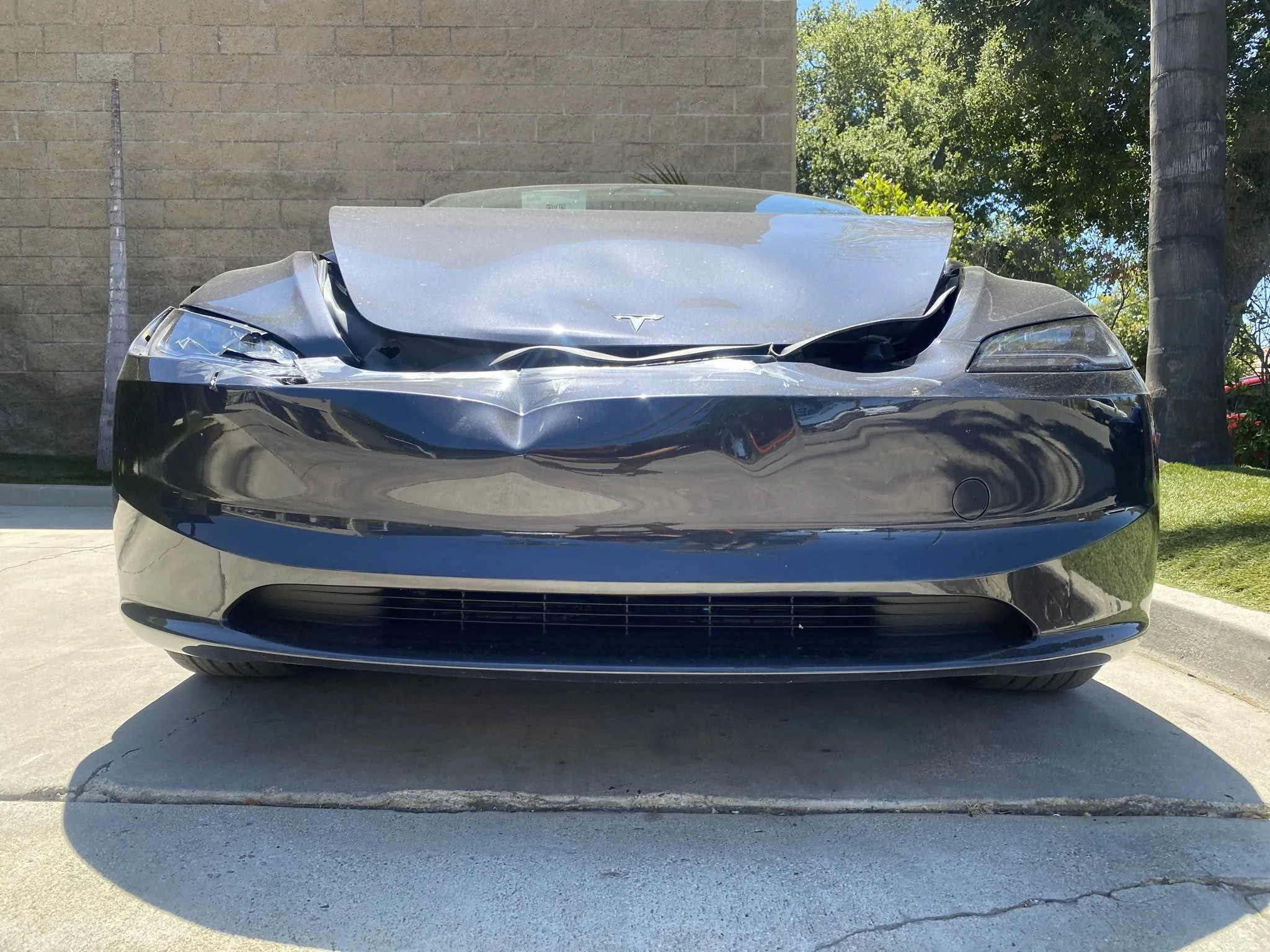
A bumper fascia is part of a larger assembly.
During a collision, forces can affect the fascia as well as attachment areas or nearby components. Additionally, a flexible bumper cover may not always show everything that occurred behind it.
Depending on the vehicle and impact, an inspection may consider:
The bumper fascia
Attachment points, retainers, and brackets
Adjacent panel fit
Relevant wiring or electrical connections
Components located in or around the affected area
Vehicle technology applicable to that model and configuration
Not every item on this list is affected in every collision. The purpose of an inspection is to determine what actually requires repair, replacement, or further evaluation.
Tesla Bumper Technology Varies by Model and Model Year
One of the most important things Tesla owners should understand is that there is no single sensor configuration shared by every Tesla bumper.
Tesla's current Front Bumper Fascia Repair Guidelines provide a useful example. The manufacturer identifies different radar configurations depending on the model and production period.
For example, Tesla's current documentation identifies radar behind the front bumper fascia on certain earlier Model 3 and Model Y configurations, while newer configurations listed in the same guidance use a different arrangement.
This is why statements such as “every Tesla has radar behind the bumper” should be avoided.
Likewise, the presence or absence of a particular camera, parking sensor, radar unit, or other component should be verified for the specific vehicle, rather than assumed from the Tesla name alone.
Why Manufacturer Procedures Matter for Tesla Bumper Repair
Tesla publishes specific guidelines for bumper fascia repair and refinishing.
For certain radar-equipped Tesla configurations, Tesla places additional restrictions on repairs and refinishing in the radar area of the front bumper fascia. These requirements are one example of why technicians should consult the current repair procedure for the specific vehicle before determining how the bumper should be repaired.
Therefore, a repair technique that is appropriate for one Tesla configuration should not automatically be assumed appropriate for another.
The repair decision should reflect the specific vehicle, damaged area, and current manufacturer information.
Technical note: Tesla repair procedures are vehicle- and configuration-specific and can be revised. Repair decisions should use the current Tesla documentation applicable to the vehicle being repaired rather than relying solely on general guidance or an older procedure.
What Damage Can Be Hidden Behind a Tesla Bumper?
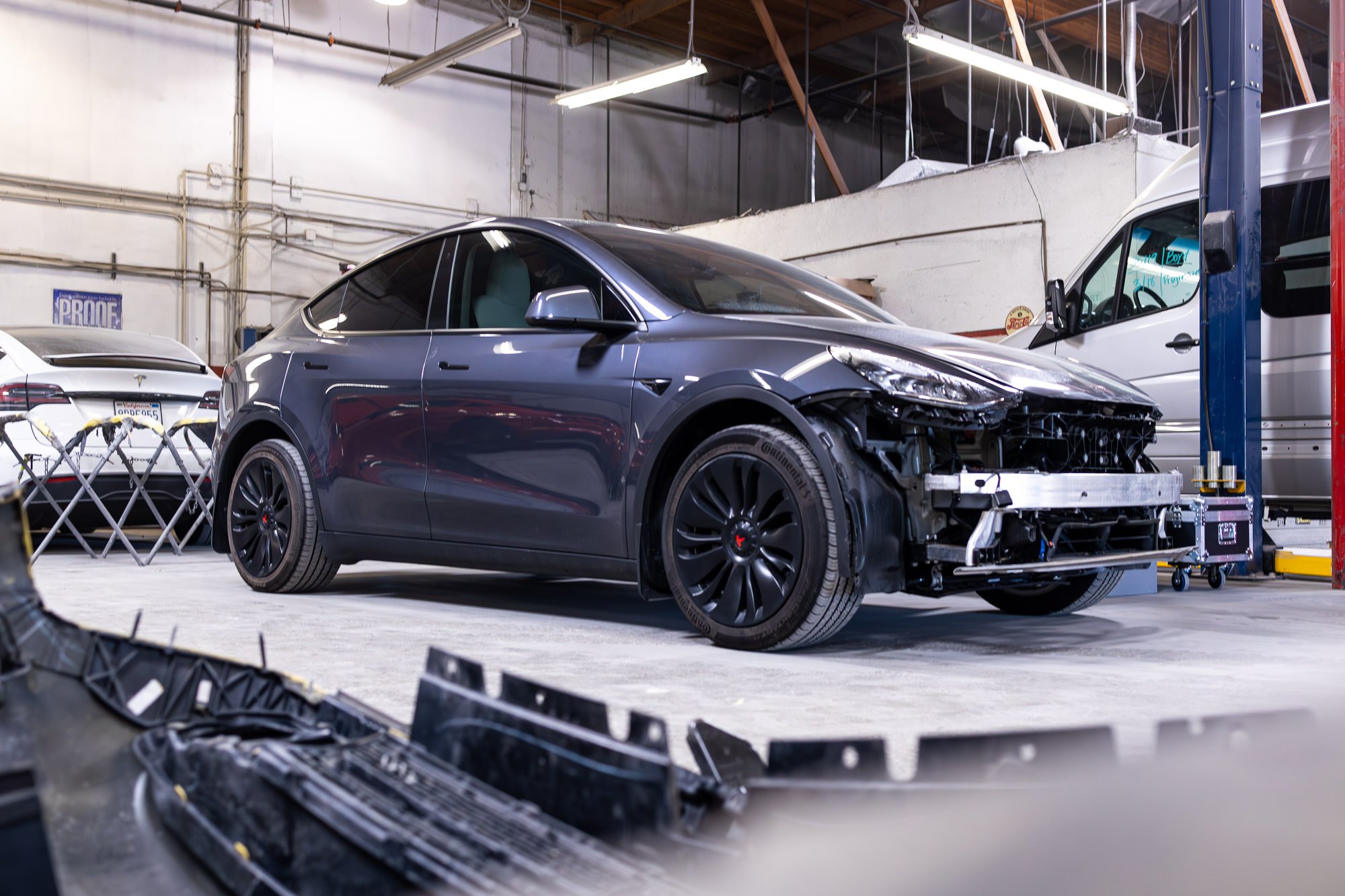
“Hidden damage” simply describes collision-related damage that cannot be completely evaluated from the exterior.
For example, a Tesla might arrive with a scraped bumper corner and a visible gap where the fascia meets an adjacent panel.
That gap does not automatically prove that significant damage exists behind the bumper. However, it may justify a closer inspection to determine why the fit changed.
Depending on the collision, technicians may find that the damage is limited to the fascia. In other cases, attachment hardware, mounting areas, adjacent components, or other parts may also require attention.
Therefore, hidden damage should never be assumed, but it also should not be ruled out solely because the exterior damage looks minor.
Why Additional Inspection or Disassembly May Be Necessary
Why Additional Inspection or Disassembly May Be Necessary
Not every Tesla bumper repair requires extensive disassembly. However, when technicians cannot fully evaluate an affected area from the exterior, removing the bumper fascia or related components may provide the access needed for a more complete inspection.
Tesla publishes model-specific procedures for removing and replacing fascia components. Because configurations can vary, technicians should reference the current procedures applicable to the specific vehicle rather than assume every Tesla bumper assembly is the same.
For this reason, an initial photo estimate may not always represent the final repair scope when portions of the collision-damaged area are still concealed.
Does Every Tesla Bumper Repair Require Calibration?
No.
A damaged Tesla bumper does not automatically mean a camera, radar sensor, or other driver-assistance component requires calibration.
Whether additional inspection, calibration, testing, or other procedures are required depends on the specific vehicle configuration, affected components, repair operations performed, and current Tesla procedures.
This distinction matters because Tesla hardware has changed across models and production years.
Therefore, a responsible repair plan should not begin with:
“Every Tesla bumper repair requires calibration.”
Instead, the appropriate question is:
“What procedures does Tesla specify for this vehicle and this repair?”
That approach avoids both unnecessary assumptions and the risk of overlooking an applicable manufacturer procedure.
Can a Tesla Bumper Be Repaired, or Does It Need Replacement?
Can a Tesla Bumper Be Repaired, or Does It Need Replacement?
Three Common Tesla Bumper Repair Misunderstandings
1. “The Damage Looks Small, So It Must Be Cosmetic”
Sometimes it is.
However, exterior appearance alone may not reveal the condition of attachment areas or nearby components.
Better approach: Evaluate the damaged area before determining the final repair scope.
2. “Every Tesla Has the Same Sensors Behind the Bumper”
Tesla's documentation shows that hardware configurations vary by model and production period.
Better approach: Verify the equipment on the specific vehicle and consult the applicable Tesla information.
3. “Every Tesla Bumper Accident Requires Calibration”
This is also too broad.
The required procedures depend on the vehicle, affected components, and repair operations.
Better approach: Follow the current Tesla procedure applicable to the specific repair rather than assuming calibration is either always or never required.
How Prestige Bodyworks Handles Tesla Bumper Repair in Oxnard
Prestige Bodyworks is a Tesla Approved Body Shop in Oxnard.
Tesla explains that its Approved Body Shops are factory trained and equipped to perform Tesla collision repairs. That manufacturer-specific training and access to repair information are especially relevant when repair requirements differ among models, production periods, and vehicle configurations.
For bumper repairs, the process starts by evaluating the specific vehicle and actual collision damage before determining the appropriate repair plan.
Depending on the vehicle and repair, that may include evaluating the fascia and attachment areas, checking relevant adjacent components, identifying the vehicle configuration, and consulting current Tesla repair information.
When additional repair operations are required, the repair plan should reflect the current Tesla procedures applicable to that vehicle and the work being performed.
Prestige Bodyworks also assists with collision-related insurance claims. However, insurance coverage, parts authorization, and payment remain subject to the individual policy, insurer, and claim.
Prestige serves Tesla owners in Oxnard and surrounding Ventura County communities, including Ventura, Camarillo, Port Hueneme, and Santa Paula.
What Oxnard Tesla Owners Should Expect After Bumper Damage
What Oxnard Tesla Owners Should Expect After Bumper Damage
How Long Does Tesla Bumper Repair Take?
There is no single timeline for Tesla bumper repair in Oxnard.
A primarily cosmetic bumper repair can involve a very different process from a collision that requires replacement parts, additional body repair, or vehicle-specific procedures.
Parts availability and insurance claim processing can also influence the schedule.
Therefore, a more reliable timeline can usually be provided after the vehicle has been inspected and the repair scope is understood.
Tesla Bumper Repair in Oxnard: The Bottom Line
Tesla bumper damage should not automatically be treated as either a simple cosmetic repair or a complex technology repair.
Either assumption can be misleading.
Instead, the repair should reflect the specific Tesla, its model and production configuration, the location and extent of collision damage, and the current manufacturer procedures that apply.
For Oxnard Tesla owners, that means looking beyond the visible scrape or dent while also avoiding assumptions about sensors, cameras, calibration, or hidden damage that may not apply to the vehicle.
As a Tesla Approved Body Shop in Oxnard, Prestige Bodyworks can evaluate collision damage using the repair information applicable to the specific Tesla and repair.
Contact Prestige Bodyworks for certified repairs done right the first time.
Sources
Tesla — Collision Support
Official Tesla information about collision repair and Tesla Approved Body Shops.
Tesla — Front Bumper Fascia Repair Guidelines, 2025+ Model Y Collision Repair Procedures Manual
Official Tesla guidance illustrating vehicle- and configuration-specific bumper fascia repair requirements.
Tesla — Front Fascia Remove and Replace, 2025+ Model Y Collision Repair Procedures Manual
Official Tesla procedure illustrating model-specific fascia removal and replacement information.
