

Why Won’t My Car Door Close Properly After an Accident?
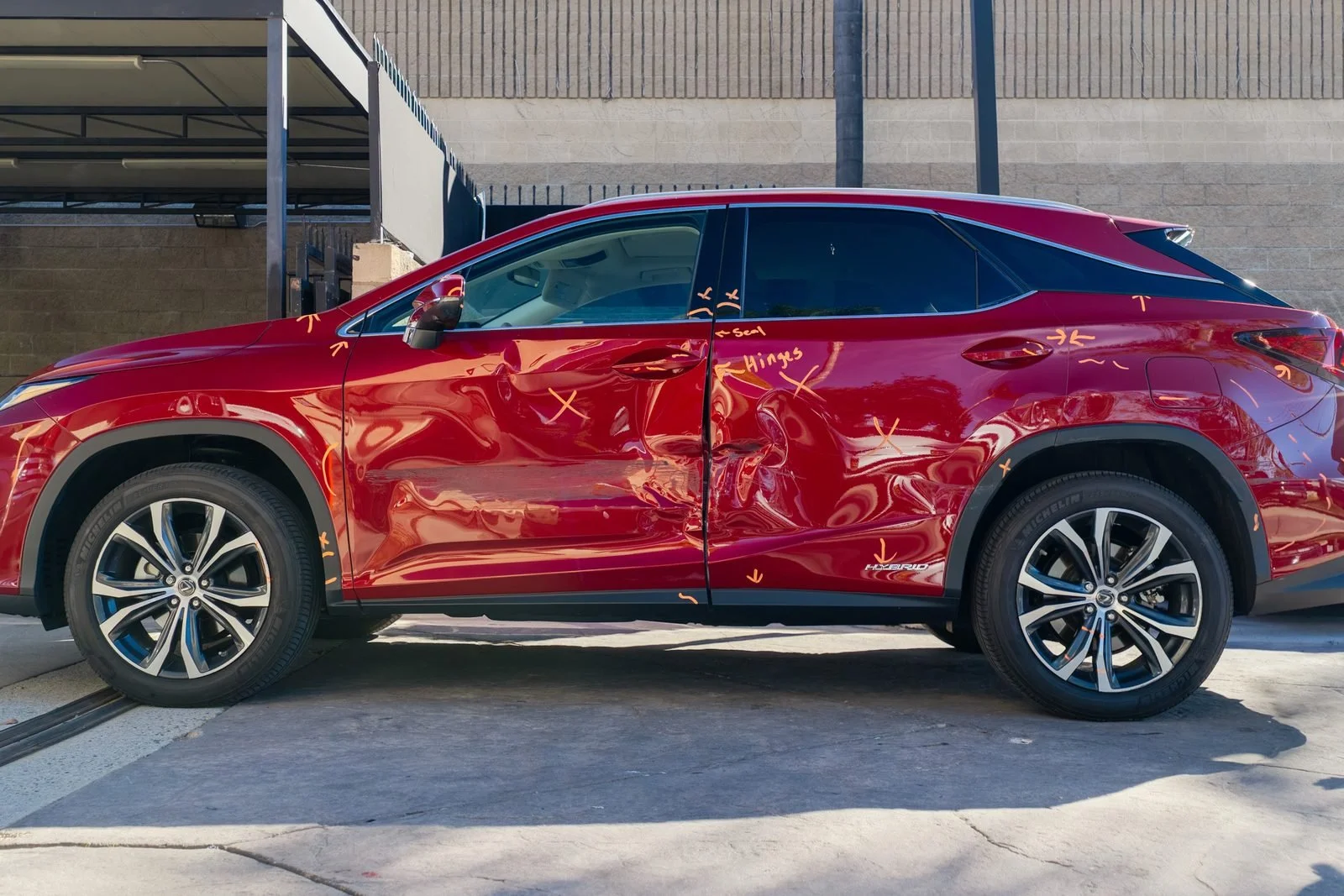
If your car door won't close properly after an accident, the impact most likely moved one of five things: the striker, the latch, the hinges, the door itself, or the door opening in the body. The first few are often simple hardware fixes. A shifted door opening is different. That points to structural damage, and the only way to tell which one you have is to measure the vehicle, not just adjust the door until it shuts.
If you're in Oxnard, El Rio, Port Hueneme, or anywhere in western Ventura County, this guide will help you understand what's going on before you bring the car in.
Quick Answer: Common Reasons a Car Door Won't Close After an Accident
A car door usually won't close after an accident because the impact moved one of five things: the striker, the latch, the hinges, the door itself, or the door opening in the vehicle's body. A shifted striker or damaged latch is often a hardware repair. A bent door or shifted opening can mean panel or structural damage that has to be measured against the manufacturer's dimensions. If the door won't latch securely, don't drive the car.
How a Car Door Is Supposed to Close
A car door hangs on hinges on the front pillar, and a latch inside the door grabs a U-shaped striker on the pillar behind it. Weatherstripping and bump stops help it seal and sit flush. All of these parts are set to tight tolerances, so a door that won't close after an accident is a symptom, not a diagnosis. I-CAR lists a door, hood, or decklid that "binds, drops, or sticks when opening" as a possible visual sign of structural damage. [1]
Cause #1: The Striker Shifted
The striker is the metal loop the door latch grabs. It's adjustable, and an impact can move it out of position.
Signs: The door needs a hard slam, latches on the first catch only, or rattles when closed.
What it means: If the door opening itself is straight, a shifted striker is often one of the simpler fixes. There's a catch, though. Adjusting the striker should come last, not first. Manufacturer panel-adjustment guidelines call for setting the hinges and gaps first, then installing the striker as the final step to set flushness. They warn against forcing a door into alignment with the latch and striker, because that can stress the hinges and latch and make them wear out early. [2]
That's why a good body shop won't just bend the striker over until the door shuts. If the pillar moved, re-aiming the striker hides the real problem.
Cause #2: The Latch Is Damaged
The latch assembly sits inside the door and includes the mechanism that grabs the striker. Many vehicles also tie it to the power locks and sometimes to sensors.
Signs: The door bounces back open, the handle feels loose or stiff, the power lock acts up, or the "door ajar" light stays on.
What it means: A side impact or a hit near the rear edge of the door can damage the latch. Often it's a replacement part. Still, a shop should check whether the door shell around the latch is bent, too.
Cause #3: The Hinges Are Bent
The hinges carry the full weight of the door. A front-quarter impact, or a door that got pushed past its normal opening range (for example, hit while open in a parking lot), can bend them.
Signs:
- The door sags or drops when you open it
- You have to lift the door to close it
- The bottom edge rubs the rocker panel or catches the striker low
- The gap at the front edge of the door looks uneven
What it means: Some hinges bolt on and can be adjusted or replaced. Others are welded on and take more involved repair. In either case, a shop should confirm the hinge pillar itself didn't move.
Cause #4: The Door Itself Is Bent
Sometimes the door took the hit directly. The outer skin is dented, the frame of the door is twisted, or an edge is crushed.
Signs: Visible dents or creases, the door edge rubbing the fender or rear panel, or a gap that's off in one corner only.
What it means: A bent door shell may be repairable, or it may need to be replaced, depending on the damage. Modern doors also hold side-impact beams, wiring, window regulators, speakers, mirrors, and sometimes sensors. A shop will often need to take off the trim panel to see what's inside.
Wondering what door repairs typically cost? That's covered in our guide: How Much Does Door Damage Repair Cost After a Car Accident in Oxnard?
Cause #5: The Door Opening (Pillar or Body Structure) Shifted
This is the one that matters most for safety.
In a harder hit, especially a side impact or a front-end collision with enough force, the pillars, rocker panel, roof rail, or the body structure around the door opening can move. The door may be perfectly fine. It just doesn't fit the opening anymore.
Signs this may be structural:
- Door gaps taper, wider at one end than the other. (I-CAR describes sag conditions that show up as inconsistent panel gaps from top to bottom.) [1]
- More than one door, or the hood or trunk, fits differently than before
- The windshield cracked without being hit directly. (I-CAR notes this can point to stress in the upper body structure.) [1]
- Cracked seam sealer or paint in the door jambs [1]
- A wheel sits differently in its wheel well, or the car pulls or feels off on the road
What it means: Structural misalignment has to be measured against the manufacturer's dimensions. As I-CAR puts it, visual signs only indicate that damage may be present. Measuring is what confirms it. [1] If the structure moved, it has to be repaired according to the applicable procedures before the door is fitted and adjusted.
For a closer look at structural repair, see Can a Bent Car Frame Be Repaired After an Accident? and Why Frame Damage Is Not Always Visible After a Minor Collision.
Don't Forget the Weatherstrip
Sometimes the door closes, but it doesn't feel right.
A torn, pinched, or displaced weatherstrip can make the door feel spongy, let in wind noise, or let water into the cabin. That's especially noticeable on wet winter days or in the misty mornings near the coast. Weatherstrip damage is usually minor. But if the seal got crushed, that's evidence the door or opening was pushed out of shape, and it's worth checking why.
Cosmetic vs. Structural: How to Tell the Difference
You can't diagnose structural damage from the driveway. You can collect useful clues for the shop, though.
Quick At-Home Checklist (Only if the Car Is Safe to Approach)
- Does the door latch at all? (If not, don't drive it)
- Do you have to slam it, lift it, or push it closed?
- Are the gaps around the door even at the top, middle, and bottom?
- Do the other doors, the hood, and the trunk still close normally?
- Any new wind noise, water leaks, or a "door ajar" warning?
- Any cracks in the windshield or paint near the door jambs?
- Does the car pull, or does the steering wheel sit off-center?
- Take photos of the gaps and damage in daylight before anything gets moved
| What You Notice | More Likely | Next Step |
|---|---|---|
| Hard to close, gaps look even | Striker or latch | Have a shop check the opening, then adjust |
| Door sags or drops | Hinges | Inspect hinges and hinge pillar |
| Dent or crease on the door | Door shell | Evaluate repair vs. replace |
| Uneven or tapered gaps, other panels off | Possible structural shift | Structural measurement |
| Door won't latch at all | Could be any of the above | Tow, don't drive |
What a Body Shop Inspects When a Door Won't Close
At Prestige Bodyworks in Oxnard, a door-closing complaint after an accident gets a real diagnosis, not a quick adjustment. Here's what that typically involves:
- Visual and gap inspection: We check door gaps and flushness all around, and compare them to the matching door on the other side of the car.
- Hardware check: We cycle the latch, inspect the striker, and check the hinges for bending, play, or sag.
- Door teardown when needed: We remove the trim panel to inspect the latch, the side-impact beam area, wiring, and window components. (Learn more about what happens during the teardown phase of auto body repair.)
- Structural measurement: If anything points to a shifted opening, we measure the vehicle against manufacturer specifications.
- Repair in the right order: Structure first, then the door and hardware, then gaps and flushness, then the striker. [2]
- Electronics and safety systems: Doors and mirrors on newer vehicles can carry sensors and cameras. If repairs affect them, scanning and ADAS recalibration may be part of the plan.
- Paint and finish: Any repaired or replaced panel gets color-matched refinishing so it blends with the rest of the car.
Repair and adjustment sequences vary by vehicle. The exact steps, including the order in which hinges, gaps, and the striker are set, depend on the manufacturer's applicable OEM repair procedures for your make and model.
The goal isn't just a door that closes. It's a door that closes, seals, and protects you the way the manufacturer designed it to.
Why "Just Make It Close" Isn't Good Enough
It's tempting to look for the fastest fix, especially if you need your car for the commute on the 101 or the drive across Oxnard every morning. But a door that's been forced to close over a shifted opening can:
- Wear out the hinges and latch early [2]
- Leak water or whistle at highway speed
- Hide structural damage that should have been repaired
- Show up later as a problem at trade-in, resale, or lease return
That's also why it matters which shop you choose. In California, you generally have the right to choose the auto body shop that repairs damage covered by your insurance. An insurer can't require you to use a specific shop. [3][4] (That's general consumer information, not legal advice. Your policy terms still apply.)
If you're comparing shops, our guide to choosing an auto body shop in Oxnard: 7 questions every driver should ask can help.
Door Repair and Structural Repair at Prestige Bodyworks in Oxnard
Prestige Bodyworks is a locally owned and operated body shop on Southbank Road in Oxnard, near El Rio and Ventura. We handle everything from a door that won't latch to full structural repair:
- Frame straightening: for unibody and structural damage around the door opening
- Fender, bumper, and panel repair/replacement: including door panels, with OEM parts
- Dent repair and paintless dent removal: for door dents that don't involve structural damage
- Color-match paint: for a factory-quality finish
- Collision repair and car accident repair: from estimate to delivery
Why Oxnard drivers choose Prestige:
- Over 30 years of auto body repair experience
- BMW Certified Collision Repair Center and Tesla Approved Body Shop
- Direct Repair Program participant with USAA and State Farm (State Farm Select Service Facility)
- Lifetime warranty on quality repairs
- Backed by the same ownership as Premier Coach Auto Collision Group
We serve Oxnard, Ventura, Camarillo, Port Hueneme, Santa Paula, and the rest of Ventura County. See our Oxnard auto body shop page, or visit us from Ventura or Port Hueneme.
Frequently Asked Questions
Is it safe to drive if my car door won't close after an accident?
If the door won't latch securely, don't drive the car. A door that can swing open while you're moving is dangerous, and taping or tying it shut isn't a safe fix. Even if the door does latch but closes poorly, get it inspected soon, because the cause could be structural.
Can a body shop just adjust the striker to fix my door?
Sometimes, if the striker moved and the door opening is straight. But manufacturer guidelines treat striker adjustment as the final step after the hinges and gaps are set, and caution against forcing a door into alignment with the striker. [2] A shop should rule out a shifted opening before adjusting the striker.
Does a door that won't close mean my car has frame damage?
Not always. It could be the striker, latch, hinges, or the door itself. But a door that binds, drops, or sticks can be a sign of structural damage, according to I-CAR. [1] Tapered gaps or other panels fitting poorly make a structural check more important. Only measurement confirms it.
Will insurance cover a car door that won't close after an accident?
If the damage came from a covered accident, door and related structural repairs are typically handled under your collision or liability claim, depending on fault and your policy. Coverage, deductibles, and approvals depend on your policy and insurer. We work with insurance companies and can help you through the claim process.
How do I know if my door hinges are bent?
Common signs are a door that sags, drops when opened, needs to be lifted to close, or rubs at the bottom edge. A technician can confirm by checking hinge play and the gaps, and by confirming the hinge pillar didn't move.
Get Your Door Checked in Oxnard
A car door that won't close properly after an accident is your vehicle telling you something moved. Sometimes it's a quick hardware fix. Sometimes it's structural. A proper inspection is how you find out which.
Sources
- [1] I-CAR — Steel Structure (Visual indicators of structural damage)
Describes sag conditions, inconsistent panel gaps, cracked seam sealer, cracked windshields, and improper closure-panel operation as possible indicators of structural damage, and notes that measuring confirms them. - [2] Rivian Service Guidelines via I-CAR RTS — Body Panel Adjustment Guidelines
An example of OEM closure-panel adjustment procedure: adjust hinges and gaps first, reinstall the striker last, and avoid forcing alignment with the latch and striker. (Procedures vary by manufacturer.) - [3] California Department of Insurance — So You've Had an Accident, What's Next?
California Insurance Code §758.5 and the consumer's right to choose a repair shop. - [4] California Department of Insurance — Auto Body Repair Consumer Bill of Rights
Consumer rights including shop selection and itemized estimates and invoices.
